The Real Thing, Handled the Real Way

Enterprise XR usually runs into two ceilings, and they are treated as separate problems.
The first is the model. Complex engineering assets often have to be simplified before they reach the headset. Polygons are reduced, subassemblies disappear, and details that matter to the real procedure get lost along the way.
The second is the interaction. Hand tracking is on every current spatial device, but in most applications the hand is still a trigger. Pinch, point, swipe. Not something that can take hold of an object.
We have partnered with Hololight because each of us removes one of them.
Two layers. One experience.
Hololight streams the rendering. The application runs on cloud, on-premises, or air-gapped hardware, and only pixels reach the headset. Assemblies arrive at full engineering density, with no data preparation, no polygon reduction, and nothing sensitive stored on the device. For customers in aerospace, defense, and regulated manufacturing, that last part often decides whether a project happens at all.
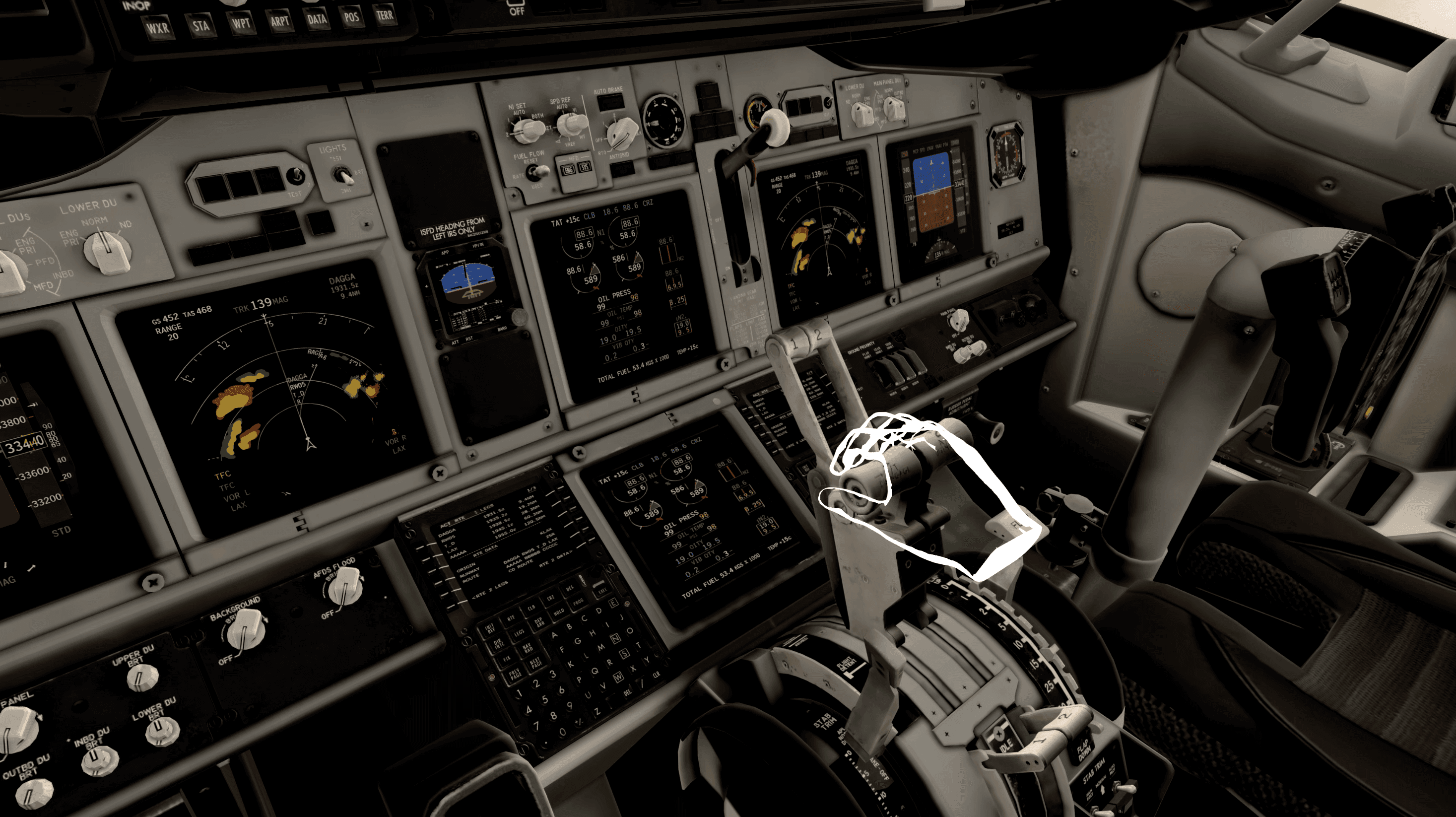
OctoXR resolves the interaction. Ten-finger grasping, two-handed manipulation, spatial UI, configurable gestures, across Unity, native visionOS, OpenXR devices, and now streamed XR.
Because it is not enough to see the real thing. You need to be able to take hold of it.
Why the layers belong together
Interaction needs compute too. A closed hand on a single object means dozens of contact points to resolve every frame. When the same headset is rendering a complex scene and resolving that at the same time, interaction is the first thing to give. Grips creep. Objects buzz against the palm. Contact drops as the scene fills up.
Moving the rendering off the device gives the interaction layer the room it needs.
A latch behaves like a latch. A part stays where you put it. Collision geometry stays close to the real mesh, so threads and tight fits are the features they were modelled as. A whole assembly simulates at once, so a mechanism can be worked in place.
From showing to doing
For training, the difference is between demonstrating a procedure and performing it. The same grip. The same reach. The same commit on a switch or a latch. When the object responds properly in your hands, repetition builds motor memory, and the skill leaves the headset with the person.
For engineering, it means picking up a part and understanding it.
How does it sit? Where does it interfere? Can both hands reach it?
Those are questions you answer by handling something, not by rotating it on a screen.
"What impressed me technically about OctoXR is how far it goes beyond gesture recognition. It resolves real physics, ten fingers, real contact points, real weight, instead of layering a few recognized gestures on top of a scene. That's exactly the piece we didn't have on the interaction side. And it's built to work with a fully rendered, engineering-density asset rather than a simplified one built to fit on the device."
— Alex Werlberger, CTO, Hololight
Hololight puts the real asset in front of you. We make it something you can take hold of.
The object and your hands were never two separate problems.